DIY Silicone Molds: From One Model to Endless Copies
You've sculpted the perfect miniature — and now you need ten identical copies? This is where most people get stuck. The fix: a reusable silicone mold you can make yourself in under 15 minutes — no 3D printer or expensive equipment required.
⚡ Quick Answer
- 3 steps: Sculpt a model → press it into 2-part silicone putty → cast copies with Resin Clay.
- Reusable: One mold lasts for 20+ casts — perfect for making charms & miniature food in batches.
- No 3D printer needed: Just your hands, silicone putty, and a sculpting tool.
- Time needed: Under 15 minutes to mold, plus 20–30 minutes curing time.
Want the techniques behind projects like this?

From Clay to Kawaii is our 36-page beginner's guide to hyper-realistic miniature food with Japanese air-dry resin clay — cream, sauces, baked effects, texture, colour and finish. Instant PDF download, nothing shipped.
Get the eBook →🎥 All Steps in the Video
From sculpting the master model to the finished, painted result — watch the complete process step by step in the video.
🎨 What You'll Need
- Let's Resin Silicone Putty (2-part)
- Tamiya Epoxy Putty for the master model (alternative: polymer clay)
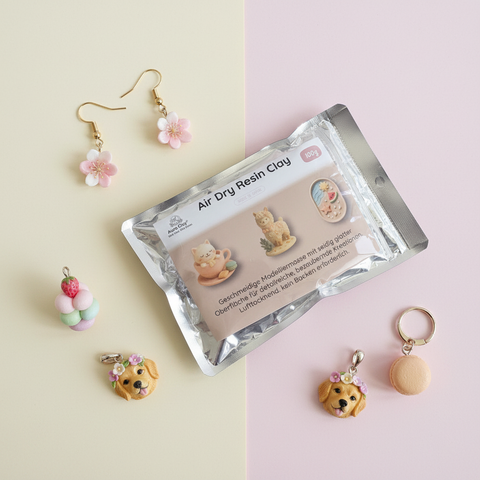
- Aura Clay Resin Clay — Japanese air-dry clay for casting
- Measuring scoops for an accurate putty mix ratio
- Silicone sculpting tools & acrylic blocks
❓ FAQ
What's the difference between silicone putty and liquid casting silicone?
Silicone putty (like Let's Resin) comes in two parts you knead together by hand — no mixing cups, no scale, no overnight cure. Liquid silicone captures finer detail but is far more involved to work with. For most miniature projects, putty is more than enough.
How many times can I reuse a homemade silicone mold?
With careful handling, a silicone putty mold lasts for 20 to 30 casts before details start to soften. That's more than enough for small batches of charms or miniature food.
Does this method work for jewelry too, not just miniature food?
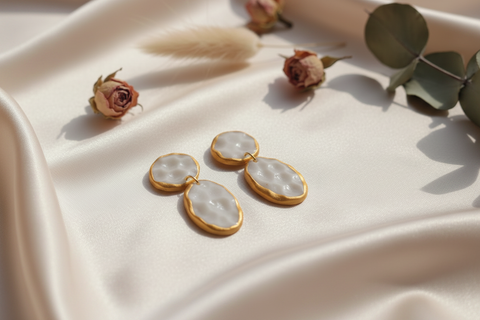
Yes — the principle works for any small, detailed model: flowers, pendants, letters, or charms. The only requirement is that your model has no undercuts that would trap the clay inside.
Why does my silicone mold tear when I demold it?
Usually the putty hasn't fully cured yet, or your model has undercuts that are too deep. Wait out the full cure time (check the packaging) and lightly dust your model with talc or baby powder before pressing it in, so it releases more easily later.
Which clay works best for casting from a homemade silicone mold?
For fine detail and a semi-transparent finish like in the video, I recommend Aura Clay Resin Clay — it presses paper-thin into the mold and holds even the smallest textures as it dries.
From Clay to Kawaii — the complete beginner's guide
Most tutorials teach you one miniature. This 36-page guide teaches the six core techniques behind almost all of them — so you can build your own pieces instead of copying ours.
- Colouring, mixing and working with Japanese resin clay
- Decorating cream, realistic sauces and UV resin finishes
- Baked, grilled and toasted effects, texture and aging
- Varnishing, tool and material references, sourcing guidance
- Cheat sheets plus links to our YouTube demonstrations
Digital PDF — instant download, nothing shipped. Beginner level, no sculpting experience needed.
Get the eBook →Completely new to air dry clay? Our ultimate beginner's guide covers everything you need to know about clay types, coloring, and drying — all in one place.
🎨 You Might Also Like


📖 Read the first chapter free
Don't take our word for it — see it for yourself. We'll email you the opening pages and the complete first chapter of From Clay to Kawaii, free. Like it? Come back and grab the rest.